Guides · Basics
Single-seater or two-seater ATV: what's the difference?
Single or two-seater ATV? We explain the differences and show when a true two-seater ATV makes sense and what to look out for when buying.

Single-seater or two-seater ATV: what's the difference?
When buying an ATV, the question often comes up: single-seater or two-seater? The difference is not simply that a two-seater has a larger seat fitted.
A genuine two-seater is designed to carry a passenger. If you want to ride with a passenger regularly, you should therefore look specifically for a two-seater that is registered accordingly.
What is a single-seater ATV?
A single-seater is basically designed for one person. These vehicles are often more compact, which makes them particularly appealing when manoeuvrability and the smallest possible dimensions are important.
A single-seater is particularly suitable if:
- you almost always ride alone
- the ATV is mainly used as a work vehicle
- you often ride on narrow forest or farm tracks
- the most compact dimensions possible are important
- you don't need a dedicated passenger seat
Typical examples are many versions of the Can-Am Outlander, Polaris Sportsman, CFMOTO CForce or Segway Snarler.
What is a genuine two-seater ATV?
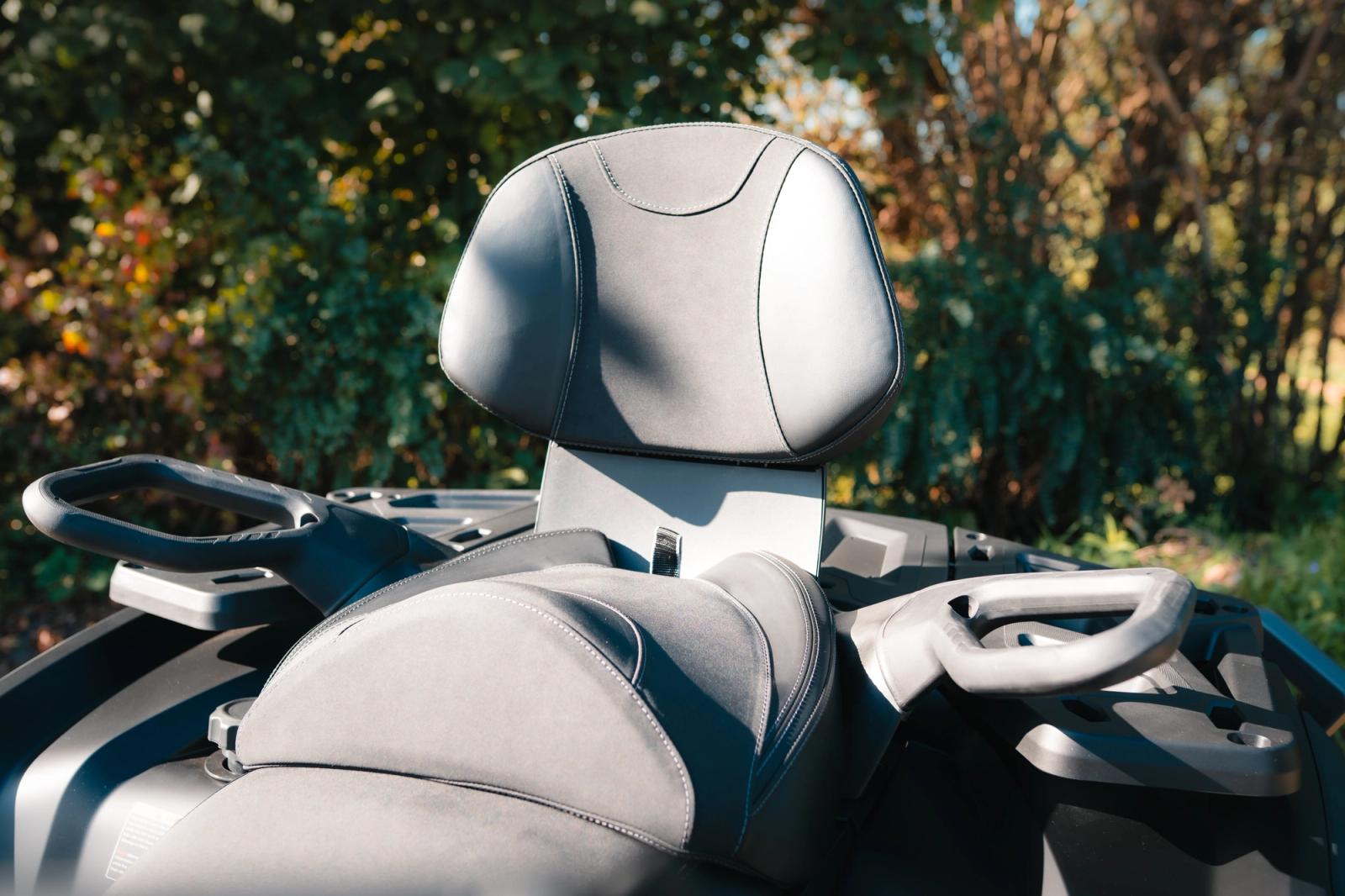
A genuine two-seater is designed by the manufacturer for a rider and a passenger from the outset.
Depending on the manufacturer, these models are offered as MAX, Touring or with a corresponding model designation, for example.
Typical features can include:
- a longer wheelbase
- a dedicated passenger seat
- a backrest for the passenger
- grab handles
- footrests for the passenger
- registration for two people
Well-known examples include the Can-Am Outlander MAX and various Touring models from CFMOTO and Polaris.
Can I simply fit a second seat to a single-seater?
An additional seat does not automatically turn a single-seater into a registered two-seater.
What counts is how many seats the specific vehicle is registered for. A large seat, a storage box with a back pad or retrofitted footrests therefore do not automatically mean that a passenger may legally ride along.
If you want to ride with a passenger, be sure to check the vehicle registration documents before you buy.
What are the advantages of a two-seater?
The biggest advantage is obvious: a genuine two-seater is intended for carrying a passenger.
The longer wheelbase can also change how it rides compared with a more compact single-seater. On the other hand, the vehicle needs a little more space and can be less nimble on very narrow tracks.
A two-seater is particularly appealing for:
- touring together
- leisure rides for two
- longer rides with a passenger
- riders who regularly want to take a second person along
What are the advantages of a single-seater?
If you almost always ride alone anyway, you often don't need the extra passenger seat.
The more compact design can be an advantage especially for working jobs, in the woods, on hunting grounds and on narrow tracks.
For many riders, a single-seater is therefore the more sensible choice if the ATV is mainly used alone.
Is a two-seater automatically better?
No. A two-seater is not inherently better than a single-seater.
If you want to take a passenger regularly, you benefit from a genuine two-seater. If you mainly ride alone and value the most compact vehicle possible, you may be better served by a single-seater.
Regardless of this, engine power and equipment should also be chosen to suit the intended use.
Conclusion: how many people will really ride along?
The most important question before buying is simply: will you actually ride with a passenger regularly?
If so, you should go straight for a genuine two-seater that is registered accordingly.
If, on the other hand, the ATV will be used almost exclusively alone and compact dimensions matter more, there is a lot to be said for a single-seater.
What matters is not the length of the seat, but whether the specific vehicle is actually designed and registered for the number of people you want to carry.


